Sun Protection on Open Water: Preventing Severe Radiation Burns with UV-Rated Apparel and Sunscreen
Many outdoor enthusiasts heavily underestimate the sheer velocity of solar exposure when launching onto a lake or river. A morning that feels perfectly mild and comfortable on a shaded shoreline can rapidly transform into an extreme environmental hazard once you clear the tree line. Whether you are navigating a multi-day wilderness tour or enjoying a casual weekend float, prolonged exposure to ultraviolet (UV) radiation can cause deep cellular damage, rapid dehydration, and painful burns that severely compromise your health and safety.
The primary trap of marine and freshwater environments is that the open water acts as a massive magnifying glass. Even on overcast or cool spring days, paddlers are subjected to a relentless multi-directional solar assault. Understanding the structural mechanics of solar defense allows you to enjoy long hours on the river without risking the debilitating physical consequences of overexposure.
The Albedo Effect: Why Water Amplifies Solar Radiation
Many paddlers operate under the false assumption that they are only vulnerable to direct, downward sunlight. In a marine environment, however, you must contend with a phenomenon known as the albedo effect—the measure of a surface's ability to reflect solar energy. While dry land and forest canopies absorb the vast majority of incoming solar rays, the highly reflective surface of open water bounces up to 10% to 15% of raw UV radiation directly back up at your body.
This secondary, upward reflection means that standard downward shields, like the brim of a baseball cap, leave your lower face, chin, nostrils, and neck completely exposed. This intense environmental reflection is exactly why sunburn prevention is a constant battle on the water. The combined forces of overhead rays and upward reflection can double your UV intake, causing severe epidermal radiation burns in a fraction of the time it would take on a shaded hiking trail.
The Mechanics of Defensive Wear: Demystifying UPF Ratings
When building an effective on-water defense strategy, relying solely on topical creams is a losing battle. Perspiration, paddle splash, and constant physical movement will systematically erode standard topical applications. The absolute baseline of modern kayaking safety relies on high-performance, specialized UV-rated apparel to create a physical, permanent block against cellular skin damage.
Unlike standard cotton garments—which become highly translucent and lose their minimal defensive properties when damp—specialized technical fabrics are woven with tight, synthetic matrices often infused with microscopic ceramic particles to scatter radiation. When selecting your paddling gear, always prioritize the garment's Ultraviolet Protection Factor (UPF) metric:
- UPF 15 to 30: Offers basic protection, blocking roughly 93% to 96% of UV rays. This is suitable for brief morning sessions but inadequate for open-water exposure.
- UPF 50+: The premium standard for paddlesports, blocking an exceptional 98% or more of both UVA and UVB rays, ensuring your core remains insulated from damage all day long.
To maximize this physical shield, your technical wardrobe should include long-sleeve performance hoodies, lightweight technical pants, sun gloves to protect your hands from paddle friction and blistering burns, and a ventilated, wide-brimmed sun hat.
Maximizing the Defense of High-Performance Waterproof Sunscreen
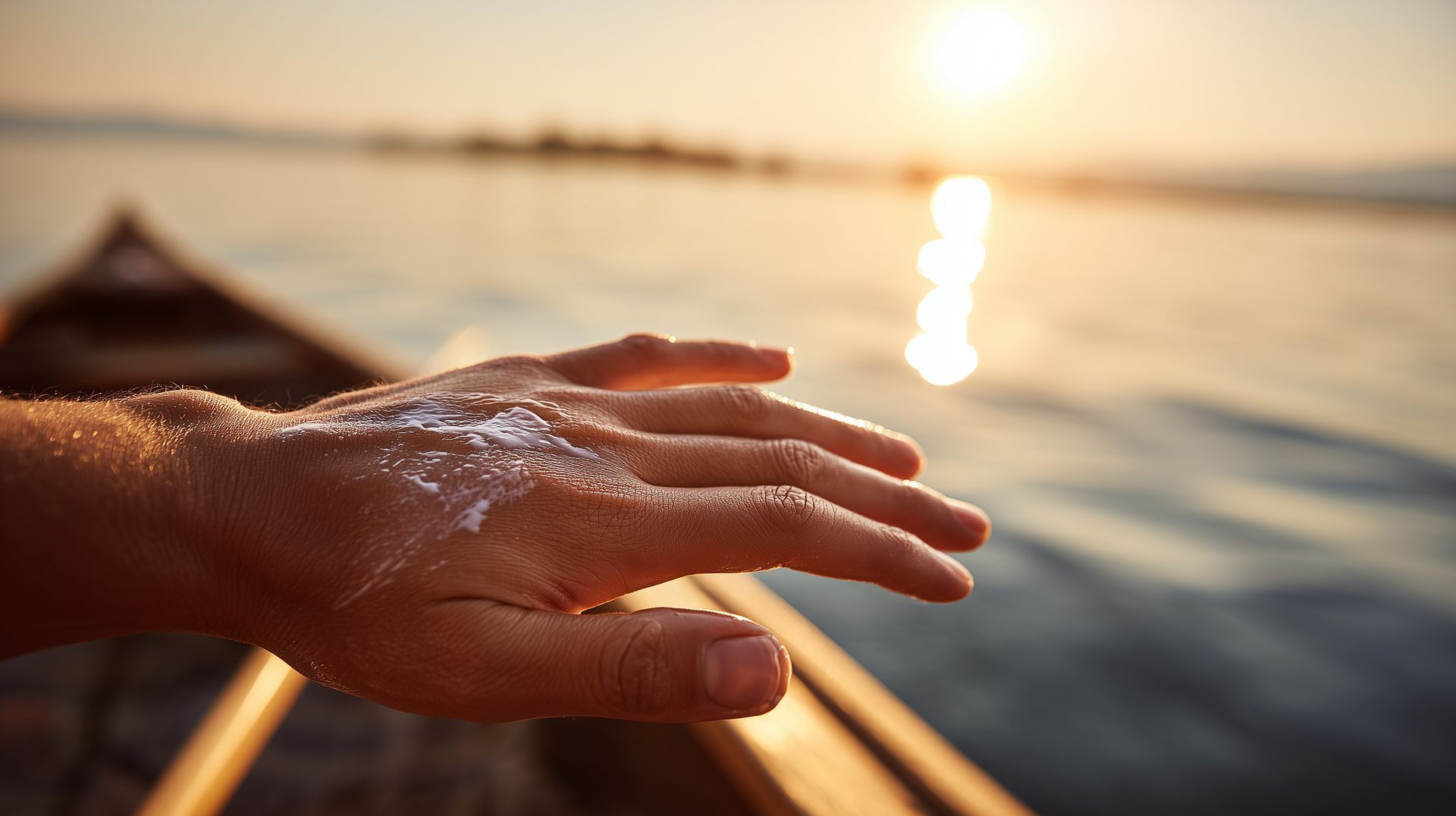
While technical fabrics cover the majority of your body, your remaining exposed skin requires a disciplined application of premium, broad-spectrum waterproof sunscreen. Novice paddlers frequently experience severe burns on overlooked anatomical transition zones. When prep-coating for a trip, pay close attention to your ears, the underside of your chin, the backs of your hands, your lower calves, and the tops of your feet, which face continuous upward reflection while resting against a kayak bulkhead or canoe floorboard.
For maximum durability in a wet environment, always select a highly water-resistant mineral block utilizing zinc oxide or titanium dioxide. These active physical compounds sit on top of the skin to instantly reflect light, rather than relying on chemical reactions that take 30 minutes to activate. To maintain proper canoeing safety protocols, you must commit to reapplying your sunblock every 80 to 90 minutes, especially after heavy paddling stretches that induce sweat or unexpected capsizes that wash away your primary layer.
The Cohesion of Hydration and Thermal Regulation
Solar radiation exposure does not happen in a vacuum; it is directly linked to your body's global hydration status and core thermal regulation. Prolonged UV bombardment causes blood vessels near the skin surface to dilate, accelerating fluid loss through perspiration as your internal systems struggle to shed heat. If your hydration levels are low, your body loses its ability to sweat efficiently, sending your internal temperature soaring into heat exhaustion or dangerous heat stroke.
Proactive trip management requires a steady, calculated intake of fresh water and balanced electrolytes throughout the day. Avoid sugary or caffeinated beverages, which act as diuretics and worsen fluid depletion. Ensuring your hydration levels remain high keeps your skin resilient, prevents cognitive fog, and mitigates the systemic fatigue associated with long, sun-drenched afternoons on open water.
Gear Up for Your Next Safe Waterway Venture with Adventure Sports
Executing a flawless day of paddling requires top-tier equipment and proper preparation. Striking out onto open water with inadequate gear or low-grade protection can quickly turn a premium weekend excursion into a painful medical liability. Partnering with a professional outfitter ensures you hit the currents fully prepared for the elements.
At Adventure Sports, we help outdoor enthusiasts plan seamless, highly secure watercraft excursions. Whether you are looking to book an outfitted, scenic guided river trip or require premium, commercial-grade canoe or kayak rentals, our team ensures you have the high-performance gear necessary for a successful trip. We can assist you in mapping out routes that feature optimal afternoon shade lines and provide the stable hull configurations needed for a relaxed, comfortable journey. Do not let the intensity of the sun compromise your weekend—contact us today to reserve your gear and enjoy sun protection on open water alongside the region's best paddling lanes.
Why is sun protection on open water so much more critical than on dry land?
Open water triggers the albedo effect, meaning the water’s surface acts like a mirror, reflecting up to 15% of the sun’s harmful UV radiation back upward. This subjects paddlers to a dual-direction exposure that burns sensitive areas like the jawline, nostrils, and the underside of the arms much faster than a standard outdoor environment.
What exactly is the difference between a standard shirt and UV-rated apparel?
Standard thin clothing, especially when wet, allows a significant percentage of UV light to pass directly through the fabric fibers to burn your skin. UV-rated apparel features a specialized, ultra-dense synthetic weave engineered to physically block and scatter up to 98% of radiation, providing a permanent shield that cannot wash away.
How often do I realistically need to reapply waterproof sunscreen while paddling?
Even when using formulas labeled as highly water-resistant, you must reapply your sunblock every 80 to 90 minutes. Constant friction from paddling movements, sweat, and water splashes will thin out the protective layer over time.
What are the most common body parts paddlers forget to protect from the sun?
Paddlers routinely suffer severe burns on the tops of their thighs and feet, the back of the neck, the tips of the ears, and the palms and backs of the hands due to the continuous grip on a paddle shaft.
Can I still get a severe sunburn on an overcast or cool day on the water?
Yes, absolutely. Ambient temperature has no bearing on UV intensity. Up to 80% of UV radiation can easily penetrate light cloud cover, and cool river breezes often mask the initial burning sensation, leading to severe, un-noticed skin damage.